
Skip to product information
1 of 2

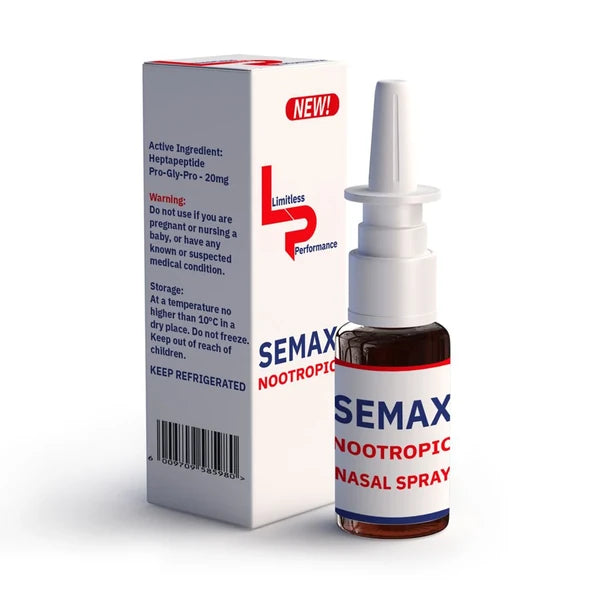
Semax nootropic Peptide Nasal Application

Regular price
R 610.00
Sale price
R 610.00

    Shipping information

    Use collapsible tabs for more detailed information that will help customers make a purchasing decision.

    Ex: Shipping and return policies, size guides, and other common questions.
    Returns information

    Use collapsible tabs for more detailed information that will help customers make a purchasing decision.

    Ex: Shipping and return policies, size guides, and other common questions.

    Product Details

    Semax Peptide: A Comprehensive Guide to Cognitive Enhancement & Brain Health

    What Is Semax Peptide?

    Semax is a synthetic heptapeptide originally developed in Russia from a fragment of Adrenocorticotropic Hormone (ACTH 4–10). Unlike ACTH, Semax does not stimulate cortisol production. Instead, it has been studied primarily for its neuroprotective and nootropic properties, making it one of the most researched peptides for cognitive function and brain health. It has been used clinically in Russia for neurological conditions such as stroke recovery and cognitive impairment, although it is not approved by the U.S. FDA and remains investigational in many other countries.


    How Does Semax Work?

    Semax works through several neurological pathways that support optimal brain function.

    1. Increases Brain-Derived Neurotrophic Factor (BDNF)

    One of Semax's most significant mechanisms is its ability to increase Brain-Derived Neurotrophic Factor (BDNF), a protein essential for:

    • Learning
    • Memory formation
    • Neuroplasticity
    • Neuron survival
    • Long-term cognitive performance

    Higher BDNF levels are associated with improved memory, faster learning, and better brain resilience.


    2. Supports Neuroplasticity

    Neuroplasticity is the brain's ability to create new neural pathways.

    Semax may help:

    • Improve learning capacity
    • Enhance memory retention
    • Support faster cognitive adaptation
    • Promote recovery following neurological injury

    3. Modulates Neurotransmitters

    Research suggests Semax influences several neurotransmitter systems, including:

    • Dopamine
    • Serotonin
    • Glutamate

    This may contribute to improvements in:

    • Focus
    • Motivation
    • Mood
    • Mental energy
    • Cognitive processing speed

    Much of this evidence comes from preclinical studies and regional clinical research.


    Potential Benefits of Semax Peptide

    Current research suggests Semax may support:

    Enhanced Focus

    Many users report:

    • Better concentration
    • Reduced mental fatigue
    • Improved productivity

    Improved Memory

    Semax has been studied for its potential to improve:

    • Short-term memory
    • Working memory
    • Long-term memory consolidation

    Increased Mental Clarity

    Semax may help promote:

    • Clearer thinking
    • Faster information processing
    • Improved decision-making

    Neuroprotection

    Research has explored Semax's role in protecting brain cells against damage associated with:

    • Stroke
    • Ischemia
    • Oxidative stress
    • Neuroinflammation

    These findings are strongest in stroke-related research from Russia.


    Stress Resilience

    Some evidence suggests Semax may improve the brain's ability to cope with physical and mental stress while supporting balanced mood.


    Potential Applications

    Researchers have investigated Semax for:

    • Cognitive enhancement
    • Age-related cognitive decline
    • Memory disorders
    • Stroke rehabilitation
    • Traumatic brain injury
    • Neurodegenerative diseases
    • Attention disorders
    • Mental fatigue

    While promising, these uses are not universally approved and require further high-quality clinical trials.


    Semax as a Nootropic

    Semax is often classified as a nootropic peptide because it may enhance:

    • Focus
    • Learning
    • Memory
    • Mental performance
    • Cognitive endurance

    Unlike stimulant medications, Semax is not generally considered a stimulant and is not intended to produce a euphoric effect.


    Delivery Method

    Semax is most commonly administered as an intranasal spray, a route that has been studied for delivering peptides to the central nervous system while avoiding degradation in the digestive tract.


    Potential Side Effects

    Available studies suggest Semax is generally well tolerated, although reported side effects may include:

    • Mild nasal irritation
    • Headache
    • Dizziness
    • Temporary anxiety
    • Mild insomnia
    • Fatigue

    Long-term safety data outside Russian clinical practice remain limited.


    Frequently Asked Questions

    What is Semax used for?

    Semax is researched for cognitive enhancement, neuroprotection, memory support, focus, and neurological recovery.

    Does Semax increase BDNF?

    Research indicates that Semax may increase BDNF expression, supporting learning, memory, and neuroplasticity.

    Is Semax a stimulant?

    No. Semax is not considered a traditional stimulant, although some users report increased mental alertness and motivation.


    Conclusion

    Semax is one of the most extensively studied nootropic peptides, particularly in Russian clinical research. Its potential ability to support BDNF production, neuroplasticity, memory, focus, and brain resilience has generated significant interest among researchers and clinicians. Although findings are encouraging, much of the evidence comes from preclinical studies and regional clinical trials, and larger international studies are needed to confirm its effectiveness and long-term safety. Anyone considering Semax should consult a qualified healthcare professional and be aware of its regulatory status in their country.